Studio Progress + Draft #1 of written response

on an open letter to mary daly by audre lorde, 1984
an open letter to mary daly, written by audre lorde as an essay in her book sister outsider, is a key example of an essay written with the intention of communicating a position. in this case, a letter to communicate the failings of gyn/ecology, a book on the metaethics of radical feminism written by mary daly, regarding its lack of inclusion of black / non-european women’s perspectives, heritage, and the community as a whole in regard to radical lesbian feminism. part of her letter also highlights the damaging misuse of black histories and quotes from audre herself seemingly used to check the box of including diverse perspectives without truly informing daly’s book or coming into substantial conversation with her perspectives.
“to imply, however, that all women suffer the same oppression simply because we are women is to lose sight of the many varied tools of patriarchy. it is to ignore how those tools are used by women without awareness against each other.” (lorde, 1984)
the way that lorde articulates her position is one of vulnerability, but with a firm tone so as not to dismiss the weight of her opinion. she starts by admitting her own fault in her assumptions that she will not be heard as a black woman, and thus, she did not write the letter at first. but lorde communicates the circular and unproductive nature of falling into habits such as this that will then never break barriers or create change, and has decided to write the letter anyway. beyond this, lorde’s tone does not command in a polarizing manner but firmly asks for change / consideration from daly in regards to her faults.
“i ask that you be aware of the effect that this dismissal has upon the community of black women and other women of color, and how it devalues your own words.” (lorde, 1984)
moving through the letter, lorde makes a great effort in trying to explain the hurt and impact that the dismissal of daly’s book has caused – not just for her but for all women of color. she reasons that the oppression of women is one shared amongst them, but at the same time will look radically different for non-european women. in ignoring the differences and depth that exist within different forms of oppression, it is impossible to truly analyse and understand the commonalities and differences that exist. therefore, without understanding, how do radical feminist communities move forward as one? and if not as one, how will true change ever be made? this letter intends to break the imposed silence and share perspective in the hope not to hurt but to inform and spark further conversations that may lead to a more inclusive feminist future.
“when radical lesbian feminist theory dismisses us, it encourages its own demise.” (lorde, 1984)
in dialogue with my own work
in the first half of unit 2, i began by exploring and unpacking the male gaze through an art history lens. from that point, my research lead me to consider societal patriarchal norms that exist in the workplace and, more specifically, the design industry. with shocking findings on the gender gap that exists in the uk design industry, i largely focused on experimenting with ways to display hidden histories and statistics on industry inequity in terms of gender. in an effort to create a narrowed scope of what to design for, i chose to only look at gender inequity. however, in reading audre lorde’s letter alongside other references discussing intersectionality within the world of design, i came to realize the impact of my exclusion of groups that experience inequity beyond just gender. in focusing solely on gender – and more specifically from the perspective of a white woman – i was alienating not just the perspective of people of color but also those experiencing inequity due to sexuality, wealth, age, ability, etc. in doing so, i was only progressing backwards in a goal to make a change and unite a community of women experiencing this inequity. only a small quantity of those experiencing inequity in the design industry only feel as such in terms of gender. even more so, some may feel inequity on multiple levels, which is where a new focus on intersectionality and representing all perspectives / experiences of oppression comes into play.
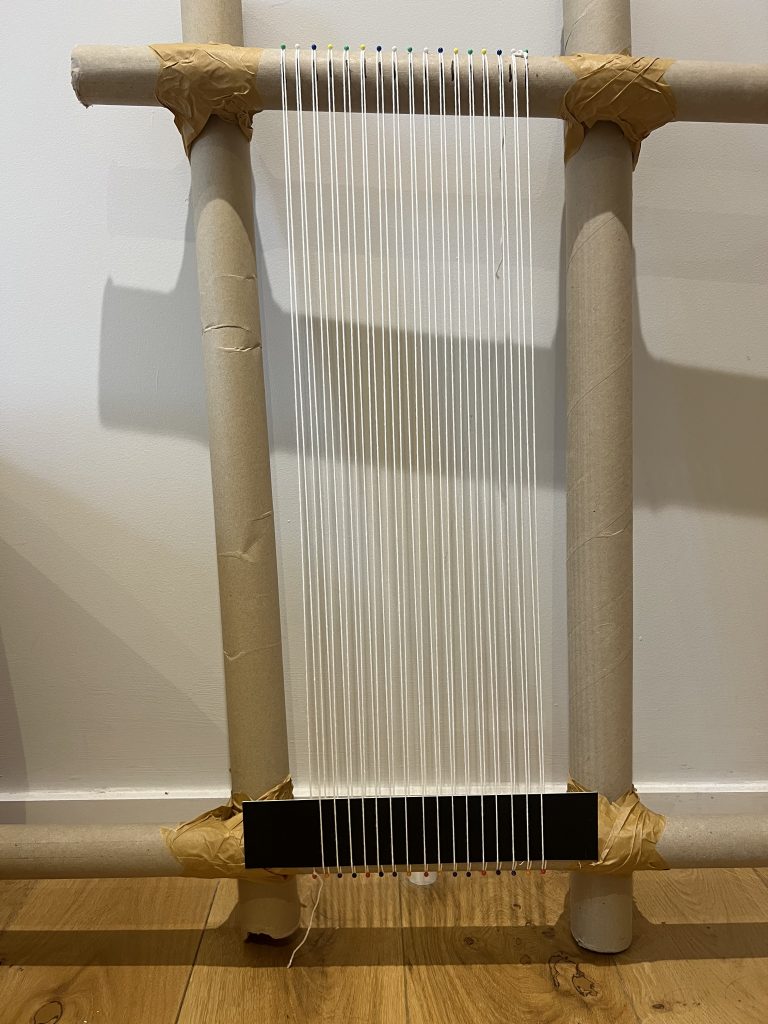
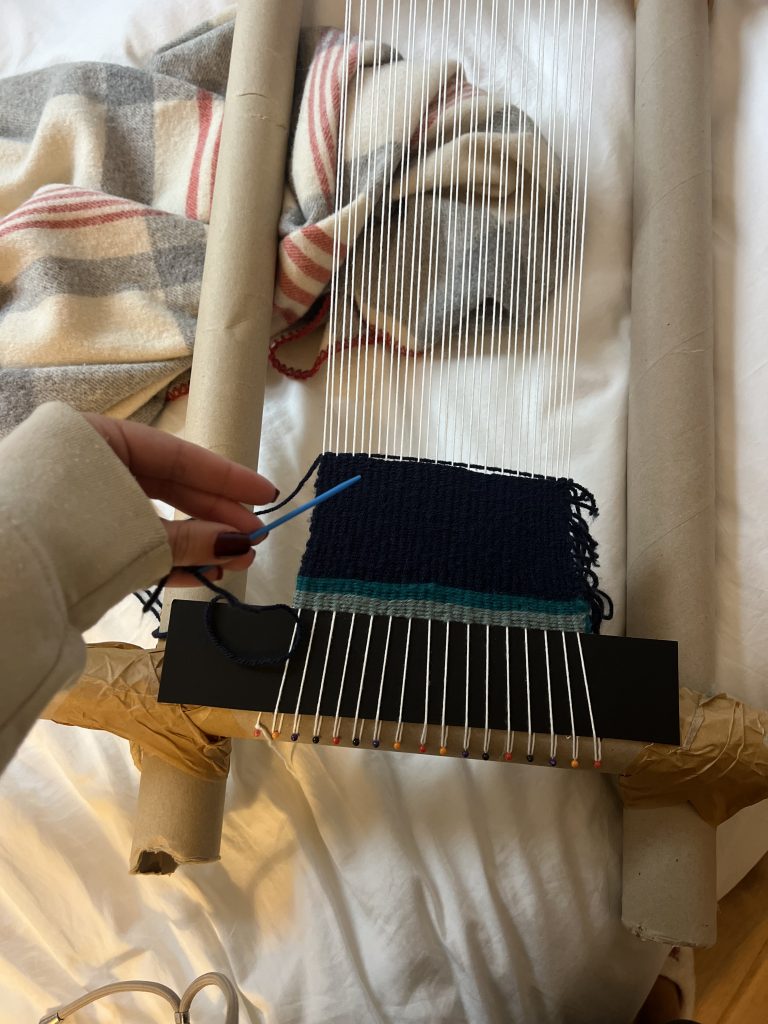
in my research of intersectionality, i began to see patterns emerge that resembled something similar to weaving or knitting. a complex web of identity pathways intersecting with each other, both visible (race, gender) and invisible (neurodivergency, age, wealth). with this, i decided my next explorations would be in representing inequity and intersectionality in the design industry through woven pieces. this line of inquiry experiments with ways to represent statistics, stories, and identities through the process of weaving – a historically undervalued craft with often female-centric homemaking connotations. in the foreword for the book, made in patriarchy, bibiana oliveira serpa writes, “everyday objects tied to domestic chores, like pañuelos, often get sidelined in design history. … this means that important contributions made by women and other marginalized groups often remain hidden, regardless of how much they actually shape society.” (serpa, 2025). using a traditional design craft in a modern context to tell women’s stories is an act of resistance within a world that undervalues historically feminine craft.
my work moving forward will share commonalities with lorde’s letter in the opening of dialogue surrounding inequities in the design industry. a large part of my exploration is discovering a failure in communication of inequity and experimenting with ways to grow awareness. recognizing where the industry has failed in the past and letting this be a stepping stone to understanding how it can change in the future. through communicating statistics and stories from real people in the industry, i hope others will find a shared sense of community and validation.
while i would never claim to fully share perspective with lorde, which may be where our work diverges, i hope to let it inform the way in which i conduct my work moving forward. learning from lorde, i want to keep my project open ended, exploring ways my project can evolve utilizing new perspectives – this may be through continuous peer review or focus groups. i would also like to explore a collective aspect of my work that involves contributions of others’ identities and experiences – this may be through guided workshops. all in all, my personal perspective is just one stitch in a much larger tapestry that should continue to grow.
moving forward
after reading lorde’s letter, it leaves me questioning how i can include more voices in my work – and not just my own interpretation of others’ voices – but truly their own. exploring collective and interactive work is a path i hope to continue down, moving forward with my project. on a more vulnerable note, i do feel hesitant to continue down the path of communicating intersectionality and inequity in the design industry as a white woman. i am nervous to inherently make assumptions or wrongfully voice other perspectives that are not my own. careful evaluation and questioning of my methods, mode of enquiry, form, etc., will continue throughout my project. in taking from audre’s letter, i want my work to be open to suggestions from others through continuous or yearly peer review / engagement, open forums, collective events, etc. as mentioned, i do not want it to be a closed entity but shifting as i grow in my understanding of intersectionality and inequity. and perhaps my project will also tell a story of my own growth in that way.
references
daly, m. (1978). gyn/ecology: the metaethics of radical feminism. boston: beacon press.
lorde, a. (1984). sister outsider: essays and speeches. an open letter to mary daly. s.l.: penguin books, p.138.
lupton, e. and tobias, j. (2021). extra bold. chronicle books.
oliveira serpa, b. and buckley, c. (2025). made in patriarchy. porto, portugal: bikini books.
* this writing has been purposely (and experimentally) written entirely in lowercase typeset. in the book extra bold by ellen lupton and jennifer tobias, contributors discuss the impact of capitalization and the implications it has when referring to race and ethnicity. “our book extra bold uses lowercase chapter titles and headings to undercut the power-based concept of typographic hierarchy … painter asserts, ““one way of remaking race is through spelling – using or not using capital letters. a more potent way, of course, is through behavior.”” (lupton and tobias, 2021)
Leave a Reply