Weaving Intersectionality
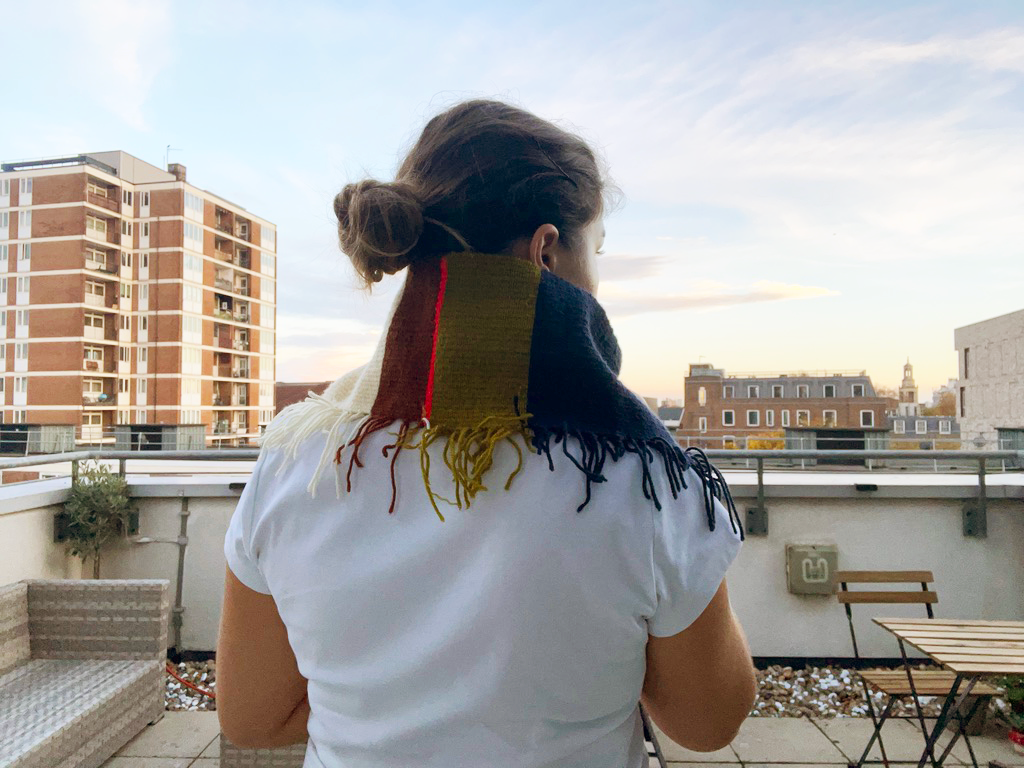
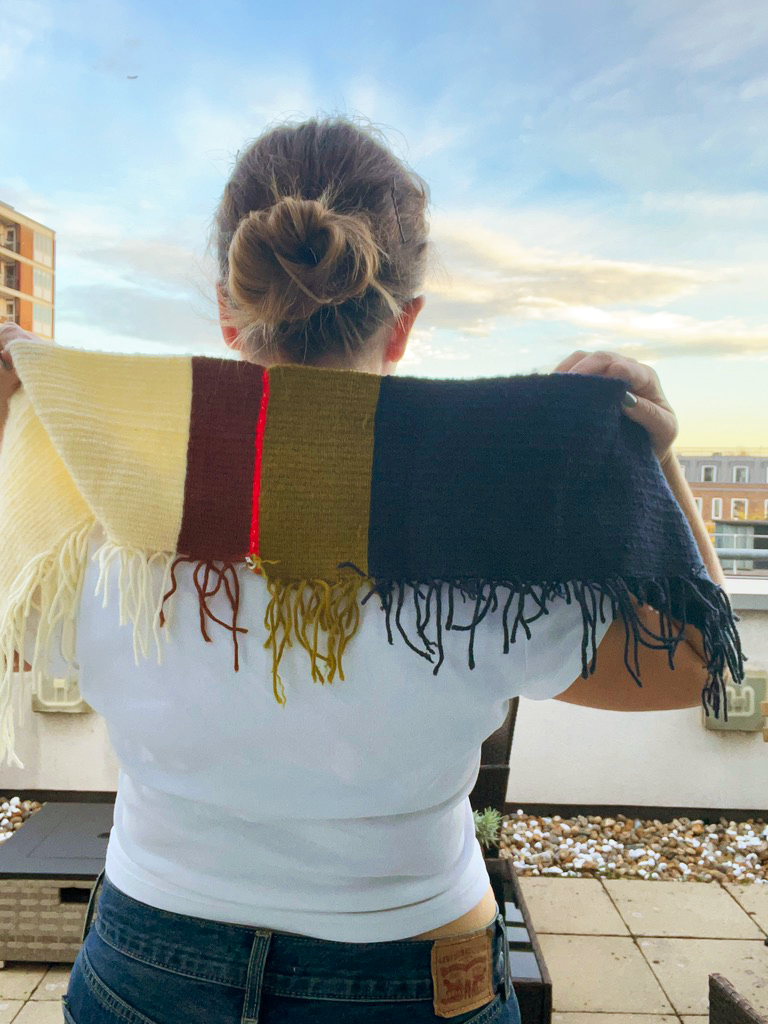
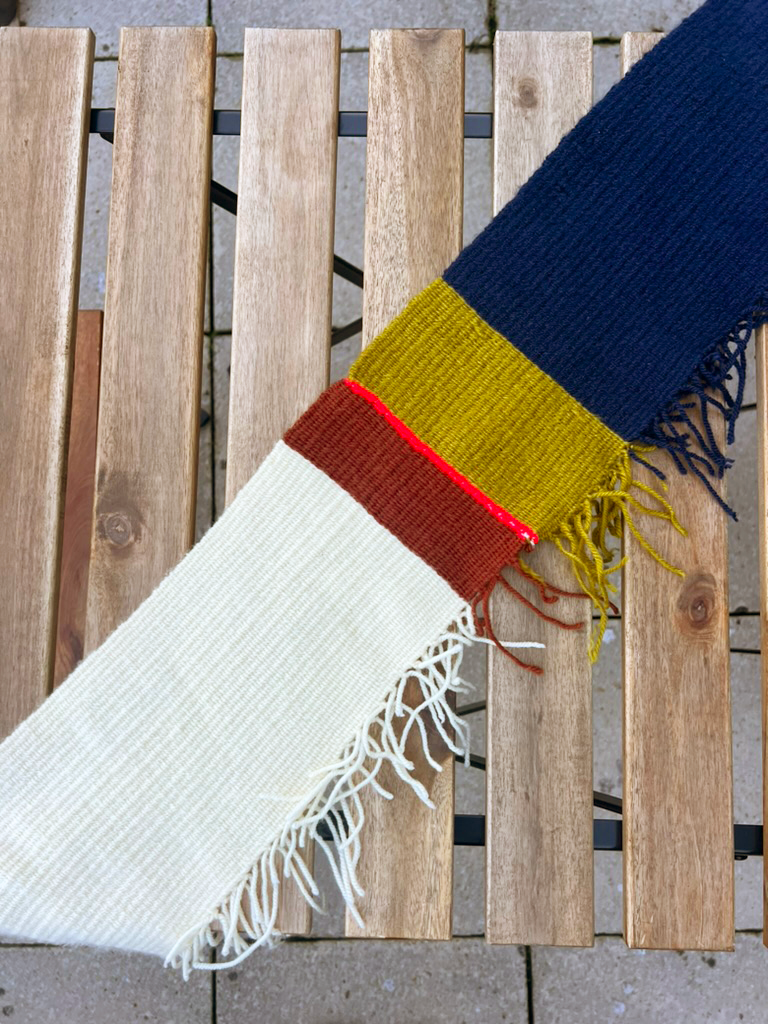
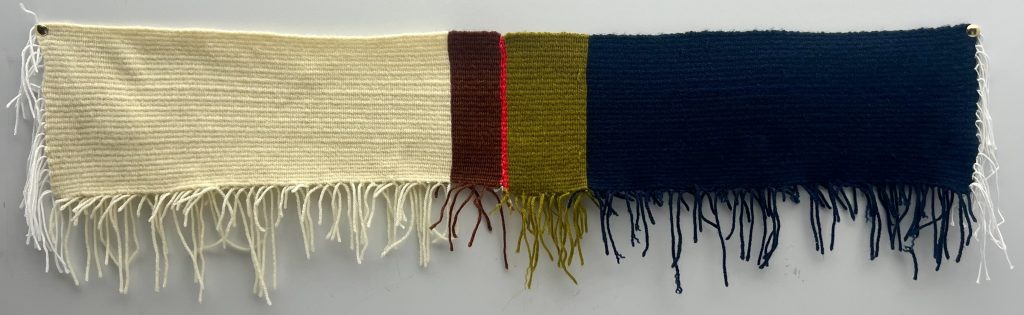
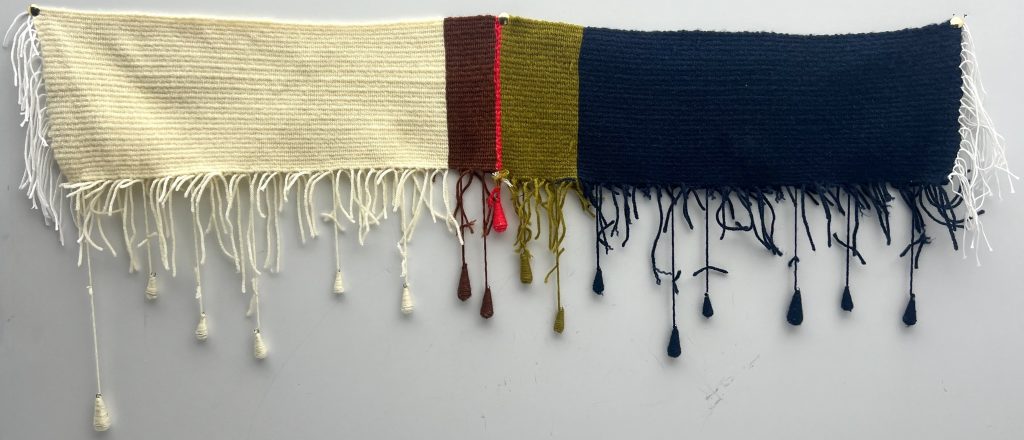
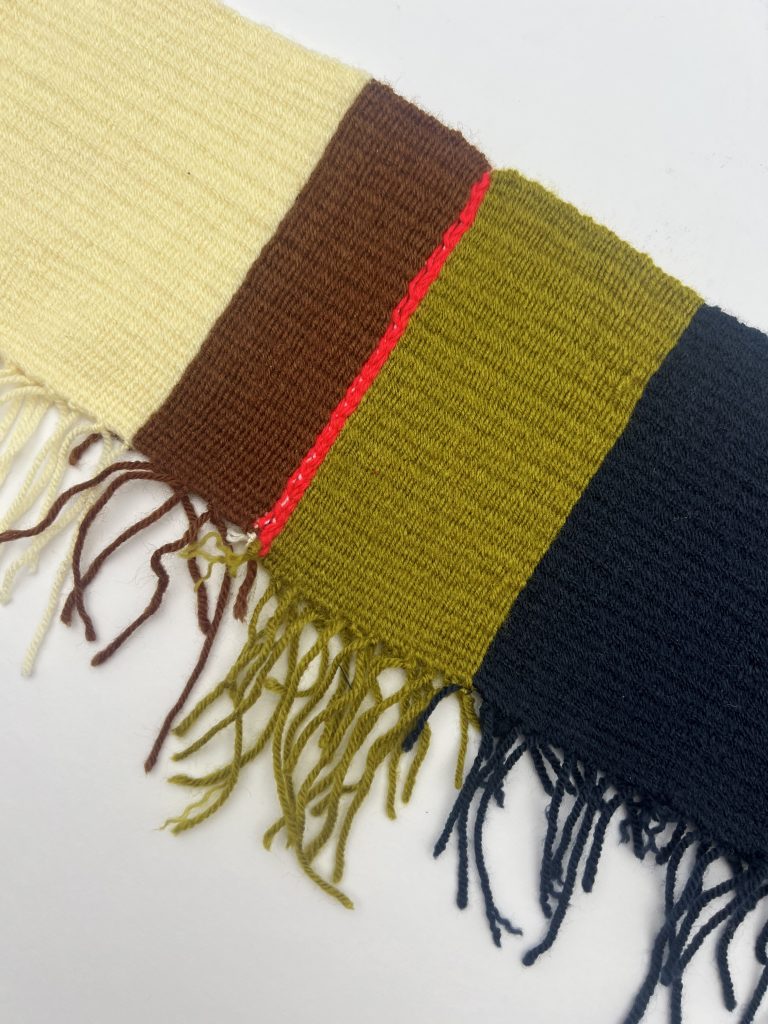
Bringing back in my studio practice, by the end of the unit I completed a wearable piece of weaving that depicts statistics from the Design Council report on the UK design economy. It showcases on one side the ratio of 22% women to 78% men and on the other the ratio of 13% black, asian, minority ethnicities (BAME) to 86% white. Knitting these two side together are 3 woven lines of red yarn representing the approximate 2.86% of BAME females within the entire design economy. Hanging off of one side are all of the end scrap yarn pieces where sections start and end. In a traditional woven piece these are trimmed and woven back into the piece to hide them away. In my work I decided to leave these exposed as a nod to the messy history of women designers – a tangible and frayed presence.
In terms of the composition and design decisions of the scarf, as a first attempt at weaving and due to financial limitations the piece is made of cotton. Further iterations could be made in a material with more direct and relevant context to the theme. The graphic style of data representation and color choice was inspired both the publication I made in the beginning of unit 2 and W.E.B Dubois data portraits that visualize black america.
In additional experimentation I attempted to add visually soft but physically heavy weights to the scarf – hanging down from the messy edges. This was an attempt to combat the softness of the piece and make it feel heavier, more impactful. Lending to the duality of this subject being both a weight on one’s shoulders and a comforting representation of community and validation – a sense of ‘you are not alone’. However, in the end I felt this distracted from the visual data representation and the art of the weaving – an unnecessary layer.
Moving forward I hope this is only the prototype of a growing collection of wearable pieces representing and acknowledging the tremendous level of inequity that exists not only within the design world but in our society as a whole. I hope to explore a more participatory and collective element in the future, bringing in others voices and craft to further enrich the project and expand my position.
Leave a Reply