Finalizing of studio work, final draft of synthesis and draft of symposium slides
Synthesis final
INTRODUCTION
To begin my inquiry within the first half of unit 2, i continued exploring and unpacking the male gaze through an art history lens. from that point, my research led me to consider societal patriarchal norms that exist in the workplace and, more specifically, the design industry. with shocking findings on the gender gap that exists in the uk design industry, i largely focused on experimenting with ways to display hidden histories and statistics on industry inequity in terms of gender. I experimented with poster making and an interactive publication displaying facts in a tangible form that invites the user to unveil them.
after taking some time to evaluate that work and through further research and personal education on designing for equity, i realized my ignorance towards other marginalized groups beyond gender that play an integral role in painting the wider picture of inequity in the design industry. with this newfound focus on intersectionality and the way that plays into the inequity, i began to question how intersectionality can be communicated graphically to uncover and expose hidden and often overlooked realities.
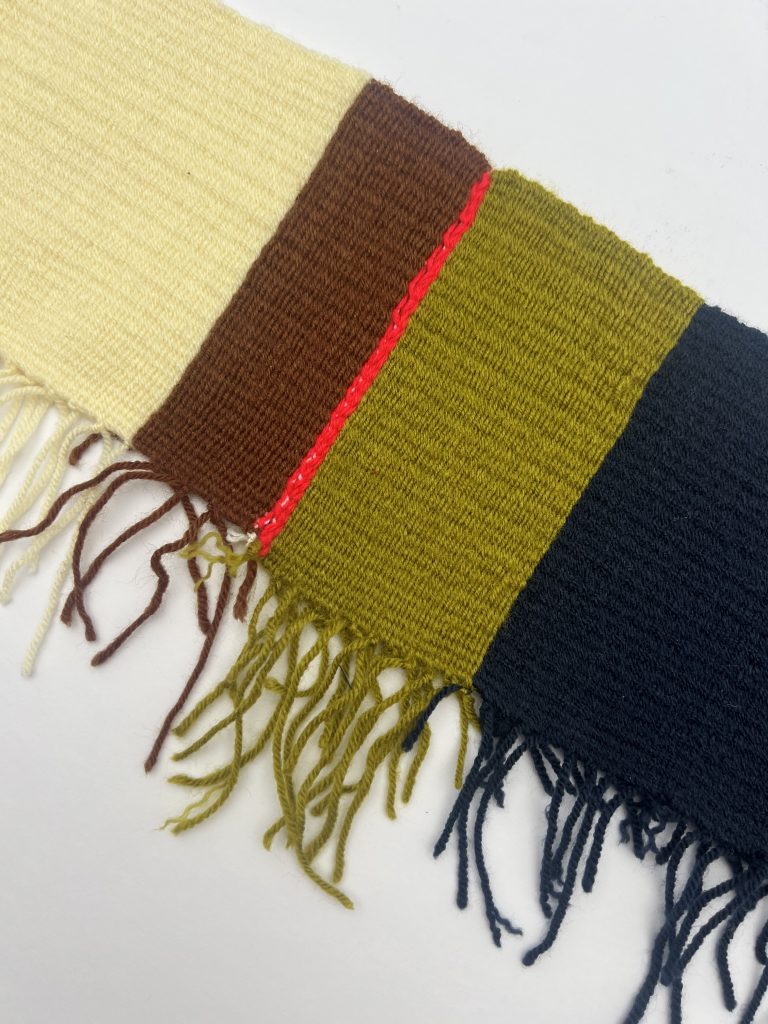
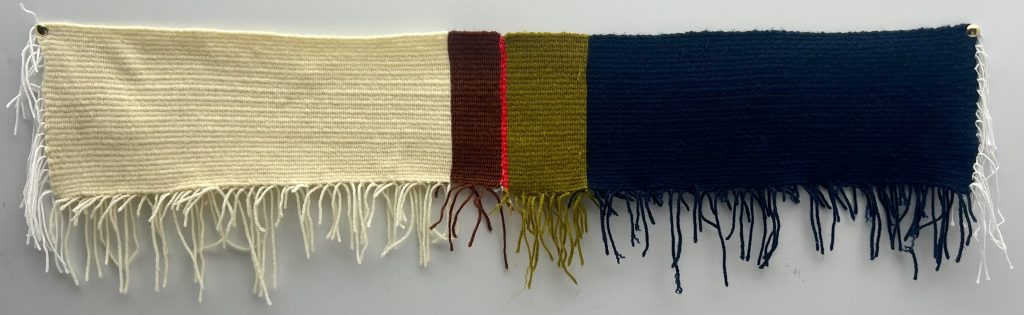
i decided to lead this enquiry through a patriarchal lens – unpacking the histories of inequity specifically within the design industry which was informed heavily by the book, made in patriarchy by cheryl buckley and bibiana oliveira serpa. exploring undervalued stereotypically “female” design techniques i began to see a link between the complex web-like nature of intersectionality and the art of weaving. i started looking at the inequities of the design industry as a tapestry formed by thousands of individual strands that make up a whole – an incredibly strong collective but also a fragile structure potentially dismantled with the pull of a thread by the patriarchal hand. this comes to represent a messy and imperfect history that continues to be woven. from this line of thinking i focused on experimentation in weaving statistics, stories, and representing a collective community of individuals experiencing inequity in the design industry.
In conclusion
in my enquiry into weaving intersectionality i hope to contribute to marginalized groups of the design industry in providing a sense of emotional validity and oneness of community – a sense of “you are not alone”. i hope this empowers others to recognize the weight of inequity, embrace its impacts, and work towards change. i also hope it spreads awareness to those outside of the community concerning the inequity within the industry – a historically buried and ignored fact.
my work has also morphed to represent methods of designing equitably. for instance, writing in all lowercase to reject the power-centric concept of hierarchy in typography (lupton and tobias, 2021). by beginning to integrate equitable design decisions regarding form and working with methods and materials (recognizing weaving as design – not just traditional women’s ‘craft’ done in passtime) i hope this normalizes the use of such design, expands common definitions of what defines design and its history, and informs the way we practice as designers.
moving forward there are quite a few explorations that i have yet to have the opportunity to fully investigate. time did not allow for me to explore the collective nature of my work on a broader scale – how can i invite specific communities to participate in weaving intersectionality to include more voices and perspectives? this may be through group workshops for traditional craft communities, students, those working in corporate design industry, etc. scale is another aspect that i have been slowly increasing but still has room to grow. due to the ‘soft’ nature of my physical woven pieces, i feel the size needs to be much larger to feel more imposing and have heavier weight and impact. through further making and integrating a participatory / collective aspect to my work, i hope to continue to explore, learn, grow, and add to the ever-evolving tapestry of my work.
Leave a Reply